SỞ GIÁO DỤC VÀ ĐÀO TẠO
QUẢNG TRỊ
KỲ THI TUYỂN SINH LỚP 10
NĂM HỌC 2026-2027
Môn thi: TIẾNG ANH · Thời gian: 60 phút
ĐỀ CHÍNH THỨC
Đề thi gồm 36 câu, 3 trang. Mã đề 101. Học sinh làm bài trên phiếu trả lời trắc nghiệm.
Anna and LilyTurns (ONE extra):
A. Where will we meet?
B. That's a good idea.
C. What time shall we meet?
D. Yes, I'd love to.
E. See you soon. Anna: Would you like to go shopping with me?
Lily: (1) ______
Anna: Great!
Lily: (2) ______
Anna: At 9 a.m.
Lily: (3) ______
Anna: At the supermarket.
Lily: OK. (4) ______
Question 1. Chọn câu (1).A. Where will we meet?B. That's a good idea.C. What time shall we meet?D. Yes, I'd love to.E. See you soon.
Question 2. Chọn câu (2).A. Where will we meet?B. That's a good idea.C. What time shall we meet?D. Yes, I'd love to.E. See you soon.
Question 3. Chọn câu (3).A. Where will we meet?B. That's a good idea.C. What time shall we meet?D. Yes, I'd love to.E. See you soon.
Question 4. Chọn câu (4).A. Where will we meet?B. That's a good idea.C. What time shall we meet?D. Yes, I'd love to.E. See you soon.
Online shoppingOnline shopping has become very popular. With a click of a mouse on your computer, you can buy anything you want. It is much easier than going into town, (5) ______ around lots of different shops. You can also see what is (6) ______ in stores all over the world when you shop online. Another good reason for shopping on the internet is that you don't have to carry heavy bags of shopping home. Online companies just send your order to your house, usually, in a few days. (7) ______ one big problem with online shopping is that you can't try on any clothes before you buy them. And often, when you get your clothes, they look very different from online pictures. They may be also larger or smaller than the size you wanted. For this reason, many people often have to return clothes (8) ______ they bought on the internet.
Question 5. Chọn từ điền vào chỗ (5).A. lookingB. findingC. passing
Question 6. Chọn từ điền vào chỗ (6).A. favouriteB. availableC. comfortable
Question 7. Chọn từ điền vào chỗ (7).A. BecauseB. ThereforeC. However
Question 8. Chọn từ điền vào chỗ (8).A. whoB. whichC. whom
Planet EarthPlanet Earth is facing many environmental problems today. One of the biggest problems is climate change. The Earth is becoming warmer because people are cutting down too many trees and using too much fossil fuel. As a result, the weather is becoming more extreme. In some places, there are stronger storms and longer droughts. Many animals are also losing their natural habitats. To help protect the planet, people should save energy, recycle waste, and use public transport more often. Students can also help by planting trees and reducing the use of plastic bags. Small actions can make a big difference in protecting our Earth for future generations.
Question 9. What is the passage mainly about?A. Environmental problems on EarthB. Different kinds of animalsC. Public transport in cities
Question 10. Why is the Earth becoming warmer?A. Because people plant more trees.B. Because people use too much fossil fuel.C. Because students recycle waste.
Question 11. The word "their" in the passage refers to ______.A. stormsB. placesC. animals
Question 12. Which of the following is NOT mentioned in the passage as the ways to protect the planet?A. recycling wasteB. planting treesC. building more factories
Question 13. What does the sign say?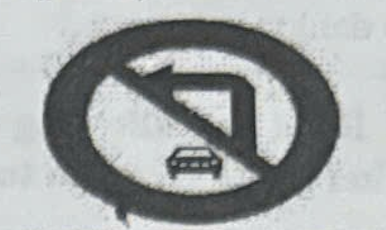
A. We should stop driving cars.B. Cars must not be turned left.C. Cars must be turned right.
Question 14. What does the sign say?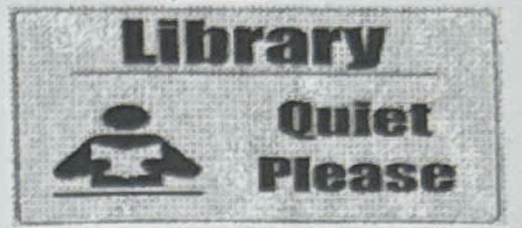
A. You must keep silent in the library.B. You need to talk loudly in the library.C. You can use your phone in the library.
Question 15. What does the notice say?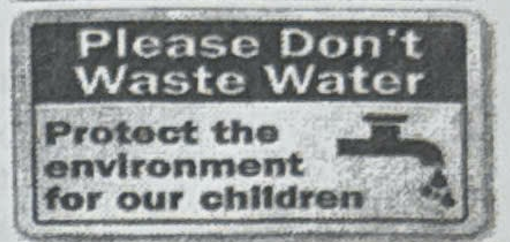
A. You can use as much water as you want.B. You should save water for future generations.C. You should turn off the tap to protect children.
Question 16. What does the notice say?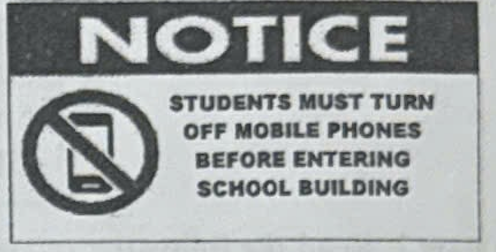
A. Students must leave their phones outside the school building.B. Students can use their mobile phones in the school building.C. Students must switch off their mobile phones before entering the school building.
Travelling in the USATravelling is one of the most popular forms of recreation in the USA. Most American employees receive an annual vacation with pay. Travelling within the country is popular because foreign travel generally takes more time and money. However, Americans who wish to vacation outside the USA are free to go almost anywhere. Every year about 13 million Americans travel abroad. The most popular vacation periods are during the summer and during the two-week school break on the Christmas and New Year's holidays. These periods are also the most crowded and generally the most expensive time to travel so people who can adjust their schedules sometimes choose vacation in the autumn. American vacationers often travel by car. Most families have a car, and those who do not have a car can rent one. Cars are usually an economical way to travel, especially for the families. It is also fairly fast and convenient. If tourists want to travel faster, they can fly to their destination and then rent a car to go around when they get there.
Question 17. Why is travelling within the country in the USA popular? Question 18. How many Americans travel abroad every year? Question 19. Do American vacationers often travel by car? Question 20. What can tourists do if they want to travel faster? Life in the cityLife in the city is very different (21) ______ life in the countryside. In big cities, people can access better services such as hospitals, schools (22) ______ shopping centers. They also have more chances to get a good job and earn more money. Many young people decide to (23) ______ there after finishing school because of these opportunities. However, city life also has some problems. The streets are often crowded, and people have to deal with noise and pollution every day. Although it can be difficult, many people (24) ______ prefer living in the city.
Question 21. Chọn từ điền vào chỗ (21). Question 22. Chọn từ điền vào chỗ (22). Question 23. Chọn từ điền vào chỗ (23). Question 24. Chọn từ điền vào chỗ (24). Question 25. I don't have enough time to finish the project.
I wish ______ Question 26. "I will buy an English dictionary tomorrow." John said.
John said that ______ Question 27. If you don't listen to the teacher, you won't understand the lesson.
Unless ______ Question 28. Because of her tiredness, she decided to take a break.
Because ______ Question 29. Conversation 1:
a. Lan: I'm preparing for my English test.
b. Mai: Hi, what are you doing now?
c. Mai: Good luck! I hope you do well in your test.A. c−b−aB. b−a−cC. a−b−c Question 30. Conversation 2:
a. Hoa: I think you should see a dentist.
b. Hoa: You don't look well. What's the matter with you, Nam?
c. Nam: I have a terrible toothache.
d. Nam: Thanks. I will do that.A. b−d−a−cB. c−d−a−bC. b−c−a−d Question 31. Conversation 3:
a. Ben: That's true, but devices can also be useful for learning.
b. Ben: Do you think students depend too much on electronic devices?
c. Tom: I agree, so we should use them in a smart and balanced way.
d. Tom: Yes, they spend a lot of time playing games or using social media.A. b−d−a−cB. c−a−d−bC. b−a−c−d Question 32. Conversation 4:
a. David: We walked through the forest and learned how to protect wildlife.
b. David: I just came back from my first eco-tour in a national park.
c. David: Yes, it was simple but meaningful, and I learned a lot.
d. Jane: That sounds interesting! Did you enjoy the experience?
e. Jane: Really? What did you do there?A. a−e−b−d−cB. b−d−c−e−aC. b−e−a−d−c Question 33. Reorder: could/ if/ asked/ He/ me/ I/ English/ speak/. Question 34. Reorder: hanging/ I/ enjoy/ out/ at/ my/ weekend/ friends/ with/ the/. Question 35. Reorder: went / visit/ the/ her/ hospital/ She/ to/ grandmother/ yesterday/ to. Question 36. Reorder: regularly/ sports/ healthy / helps/ fit / Playing /us/ and/ stay 
