SỞ GIÁO DỤC VÀ ĐÀO TẠO
SƠN LA
KỲ THI TUYỂN SINH LỚP 10
NĂM HỌC 2026-2027
Môn thi: TIẾNG ANH · Thời gian: 60 phút
ĐỀ CHÍNH THỨC
Đề thi gồm 40 câu, 4 trang. Mã đề 268. Học sinh làm bài trên phiếu trả lời trắc nghiệm.
Question 1. Từ nào có phần gạch chân phát âm khác các từ còn lại?A. sheB. leftC. redD. bed
Question 2. Từ nào có phần gạch chân phát âm khác các từ còn lại?A. wantedB. playedC. cleanedD. opened
Question 3. Nam: Do you like your school?
Lan: __________. It is very nice.A. Yes, I amB. No, I am notC. Yes, I doD. No, I do
Question 4. Tom: Can you show me the way to the supermarket?
Mike: __________.A. Yes, it is just around the cornerB. Yes, it is crowded and expensiveC. Yes, I'm buying some vegetablesD. No, I don't like going shopping
Question 5. Minh won the first prize in the English Speaking competition, so his parents are very __________ of him.A. fondB. proudC. keenD. interested
Question 6. Are you interested __________ joining our school's green club this weekend?A. inB. atC. withD. on
Question 7. Lan wants to buy __________ interesting book for her friend.A. anB. aC. Ø (no article)D. the
Question 8. We need to find a __________ to this traffic problem as soon as possible.A. solutionB. solverC. solveD. solvable
Question 9. If you study hard for the final exam, you __________ good grades.A. would getB. gotC. getD. will get
Question 10. Our English class __________ at 7:30 AM every Tuesday and Friday.A. startB. startedC. is startingD. starts
Question 11. Two days ago, my parents __________ a new bicycle for my birthday.A. is buyingB. buysC. buyD. bought
Question 12. My grandfather used to __________ up very early in the morning when he was young.A. getB. gettingC. gotD. gets
Question 13. Look! The birds __________ in the blue sky.A. fliesB. were flyingC. flyD. are flying
Question 14. The smartphone __________ I bought last week has a very good camera.A. whomB. whoseC. whoD. which
Question 15. You should __________ your raincoat because it is raining heavily outside today.A. take offB. turn onC. put onD. look for
Question 16. The teacher told us that we __________ use calculators during the math test.A. can'tB. couldn'tC. won'tD. don't
Question 17. My mother __________ dinner in the kitchen when the phone rang.A. cookedB. was cookingC. is cookingD. cooks
Question 18. My parents don't mind __________ us to the amusement park at weekends.A. takeB. to takingC. takingD. to take
Question 19. Từ gần nghĩa với cụm gạch chân: In daily life, Ray always gives me a hand with repairing the broken things in my house.A. serves meB. pleases meC. assists meD. asks me to help
Question 20. Từ gần nghĩa với từ gạch chân: It was great to see wild animals living in their natural habitat.A. forestB. landC. skyD. home
Question 21. Từ trái nghĩa với cụm gạch chân: She turned off the lights and went to sleep.A. went onB. turned onC. got overD. put off
Question 22. Từ trái nghĩa với từ gạch chân: I am not good at English, so it is quite difficult for me to understand a long text.A. newB. hardC. boringD. easy
Space exploration and digital technologyModern space exploration relies heavily on advanced digital technologies (23) __________ help human to discover the wonders of our universe. In recent years, space agencies have launched highly sophisticated rovers to explore (24) __________ surface of Mars. These robotic vehicles travel through harsh environments to collect data and take high-resolution photographs. Instead of relying only on human control, rovers use artificial intelligence to navigate through dangerous rocks more safely.
In addition, satellites orbit the planet constantly because scientists who analyze global weather patterns require rapid data transmission to predict major climate (25) __________ on Earth. International teams cooperate on these projects. (26) __________ space exploration is extremely expensive, it provides invaluable information about our solar system. Young students should be encouraged to study astronomy so they can prepare themselves for future careers in engineering. If global investment continues to rise, humanity (27) __________ even more incredible technological breakthroughs in outer space.
Question 23. Chọn từ điền vào chỗ (23).A. whoB. whenC. whichD. where
Question 24. Chọn từ điền vào chỗ (24).A. anB. Ø (no article)C. aD. the
Question 25. Chọn từ điền vào chỗ (25).A. devicesB. enginesC. shiftsD. signals
Question 26. Chọn từ điền vào chỗ (26).A. BecauseB. ThereforeC. AlthoughD. However
Question 27. Chọn từ điền vào chỗ (27).A. achieveB. will achieveC. achievedD. achieving
Question 28. What does the signboard mean?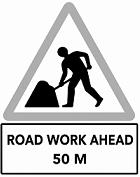
A. Watch out for school children crossing the road.B. Workers are not allowed to work on the road.C. Be careful! There is a road construction ahead.D. Only local workers are allowed to work here.
Question 29. What does the notice board say?
A. Spend more than £50 and save £10.B. Get £10 off all sales in 2 weeks.C. Get more than £10 if you are students.D. Offer for those spend less than £50.
Question 30. What does Charles want?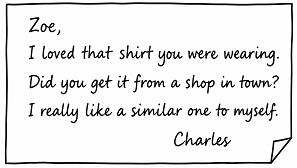
A. Charles wants to know where Zoe got his shirt.B. Charles wants to borrow Zoe's shirt.C. Charles wants to know which shirt Zoe bought yesterday.D. Charles wants to know how much Zoe liked his shirt.
Social media bans for teenagersAustralia and France have recently passed strict national laws to limit social media use among teenagers. Lawmakers say that these legal measures are necessary to reduce the mental health problems caused by cyberbullying, addiction, and constant exposure to harmful online materials. In Australia, children who are under 16 are not allowed to use social platforms like Instagram, TikTok, and YouTube. Tech companies will be fined heavily if they can't prevent young children from creating profiles. The law aims to restrict digital freedom and cut teenagers off from unimportant online communities. However, supporters emphasize that protecting vulnerable youth from severe cyber risks is far more important than uncontrolled digital access. Meanwhile, France has started a dynamic program targeting electronic device usage inside schools. French authorities have enforced a strong 'digital detox' policy that completely bans mobile phones for students under 15 throughout the school day. Educators believe that removing these devices can improve classroom concentration, decrease school bullying, and encourage children to interact face-to-face during breaks. While enforcing these policies requires strict monitoring, initial results indicate a positive change in student well-being.
Question 31. What is the passage mainly about?A. Financial and legal problems faced by international digital technology companies.B. National policies in Australia and France to restrict social media use for teenagers.C. The historical development of social media platforms in some European countries.D. The technological advantages of social media platforms in Australia and France.
Question 32. According to paragraph 2, tech companies in Australia will be fined if they __________.A. change the user settings on modern smartphone applicationsB. delete profiles belonging to adult government officialsC. allow children under 16 to create social media accountsD. refuse to donate money to local educational clubs
Question 33. The word "cyberbullying" in paragraph 1 is closest in meaning to __________.A. joining online team or group workB. threatening by using messages, emails or photosC. making online friends globallyD. bullying other friends at school
Question 34. The word "they" in paragraph 2 refers to __________.A. profilesB. tech companiesC. social platformsD. children
Question 35. According to the passage, which of the following is NOT true?A. Educators want to encourage children to interact face-to-face during breaks.B. In Australia, children who are under 16 cannot use Instagram, TikTok, and YouTube.C. Exposing too much to social media causes many problems for mental health.D. Children under 15 can use electronic devices at lunch time at school in France.
Question 36. Peter doesn't have a computer. He cannot learn about AI.A. Peter wishes he had had a computer to learn about AI.B. Peter wishes he have a computer to learn about AI.C. Peter wishes he had a computer to learn about AI.D. Peter wishes he has a computer to learn about AI.
Question 37. It rained very heavily after school. The students still walked home together happily.A. Because it rained very heavily after school, the students walked home together happily.B. Although it rained very heavily after school, the students walked home together happily.C. Although it rained very heavily after school, but the students walked home together happily.D. The students walked home together happily despite it rained very heavily after school.
Question 38. The red car can run 150 km/h. The white car can run 180 km/h.A. The red car can run faster than the white car.B. The red car cannot run as fast as the white car.C. The white car cannot run as fast as the red car.D. The white car can run as fast as the red car.
Question 39. The software was so expensive that I could not buy it.A. It was such an expensive software that I could not buy it.B. It was so expensive software that I could not buy it.C. The software was such expensive that I could not buy it.D. It is such an expensive software that I could not buy it.
Question 40. Chat GPT understands natural texts so quickly.A. Natural texts are understand so quickly by Chat GPT.B. Natural texts were understood so quickly by Chat GPT.C. Natural texts is understood so quickly by Chat GPT.D. Natural texts are understood so quickly by Chat GPT.

