Tiếng Anh lớp 9 · KNTT · Chương 14
Lý thuyết Tiếng Anh 9 Unit 11 · Communication (Electronic devices in modern classrooms)
Tổng hợp lý thuyết và hướng dẫn học phần Communication Unit 11 Tiếng Anh 9 Global Success, rèn luyện kỹ năng kiểm tra độ hiểu - phản hồi trong giao tiếp hằng ngày và thảo luận về tác động của thiết bị điện tử trong lớp học hiện đại.
1. Trang sách giáo khoa
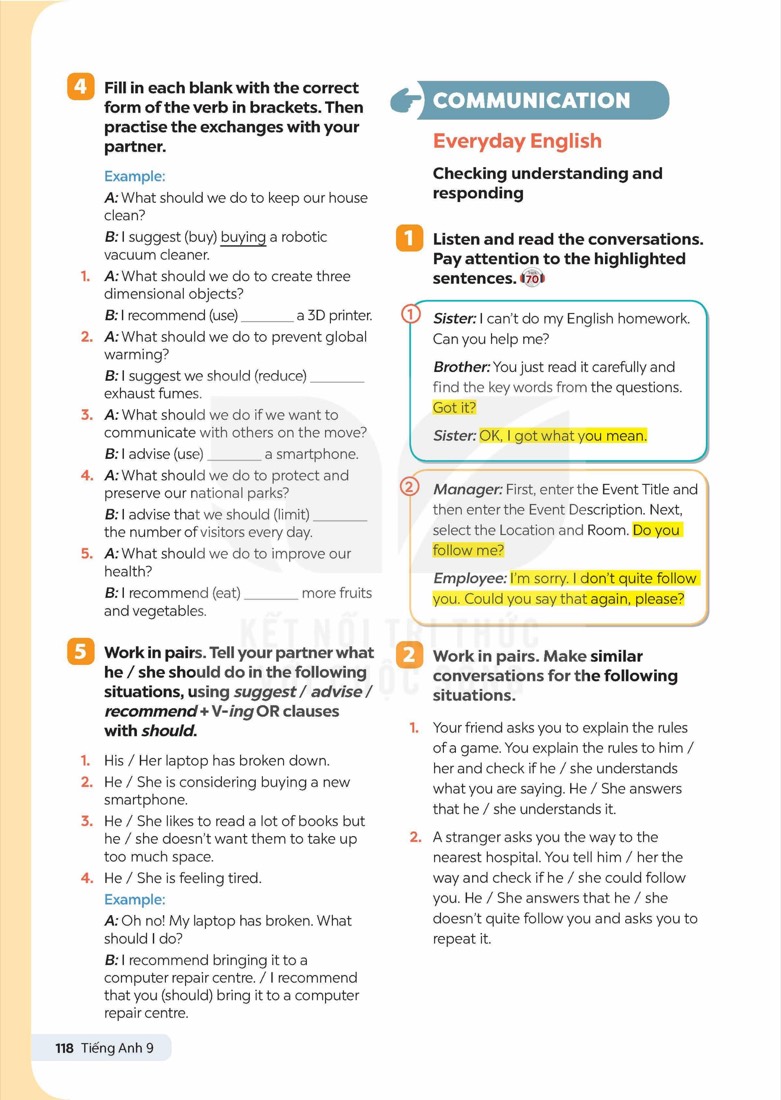
2. Tiếng Anh giao tiếp hằng ngày: Kiểm tra mức độ hiểu và cách phản hồi (Everyday English)
Trong giao tiếp hằng ngày, khi giải thích một vấn đề hoặc đưa ra hướng dẫn, chúng ta thường cần kiểm tra xem người nghe có hiểu kịp hay không, và người nghe cũng cần biết cách phản hồi rõ ràng.
1. Các mẫu câu thông dụng:
- Kiểm tra xem đối phương có hiểu không (Checking understanding):
- Got it? (Hiểu chưa? / Rõ chưa? - Thân mật, dùng với bạn bè, người thân).
- Do you follow me? (Bạn có theo kịp ý tôi không? - Thường dùng trong bối cảnh công việc, học tập).
- Phản hồi khi đã hiểu (Responding - Understand):
- OK, I got what you mean. (Được rồi, tôi hiểu ý bạn rồi.)
- Yes, I got it. / I follow you. (Vâng, tôi hiểu rồi / tôi theo kịp rồi.)
- Phản hồi khi chưa hiểu và yêu cầu nhắc lại (Responding - Not understand & asking for repetition):
- I'm sorry. I don't quite follow you. Could you say that again, please? (Xin lỗi, tôi chưa theo kịp lắm. Bạn có thể nhắc lại được không?)
2. Hội thoại mẫu trong SGK (Activity 1 - Track 70):
| Nguyên văn Tiếng Anh | Bản dịch Tiếng Việt |
|---|---|
| Conversation 1 Sister: I can't do my English homework. Can you help me? Brother: You just read it carefully and find the key words from the questions. Got it? Sister: OK, I got what you mean. | Đoạn hội thoại 1 Em gái: Em không làm được bài tập tiếng Anh. Anh giúp em được không? Anh trai: Em chỉ cần đọc kỹ và tìm từ khóa từ các câu hỏi. Hiểu chưa? Em gái: Vâng, em hiểu ý anh rồi. |
| Conversation 2 Manager: First, enter the Event Title and then enter the Event Description. Next, select the Location and Room. Do you follow me? Employee: I'm sorry. I don't quite follow you. Could you say that again, please? | Đoạn hội thoại 2 Quản lý: Đầu tiên, hãy nhập Tiêu đề sự kiện và sau đó nhập Mô tả sự kiện. Tiếp theo, chọn Địa điểm và Phòng. Bạn có theo kịp tôi không? Nhân viên: Tôi xin lỗi. Tôi chưa theo kịp ý của bạn lắm. Bạn có thể vui lòng nói lại được không? |
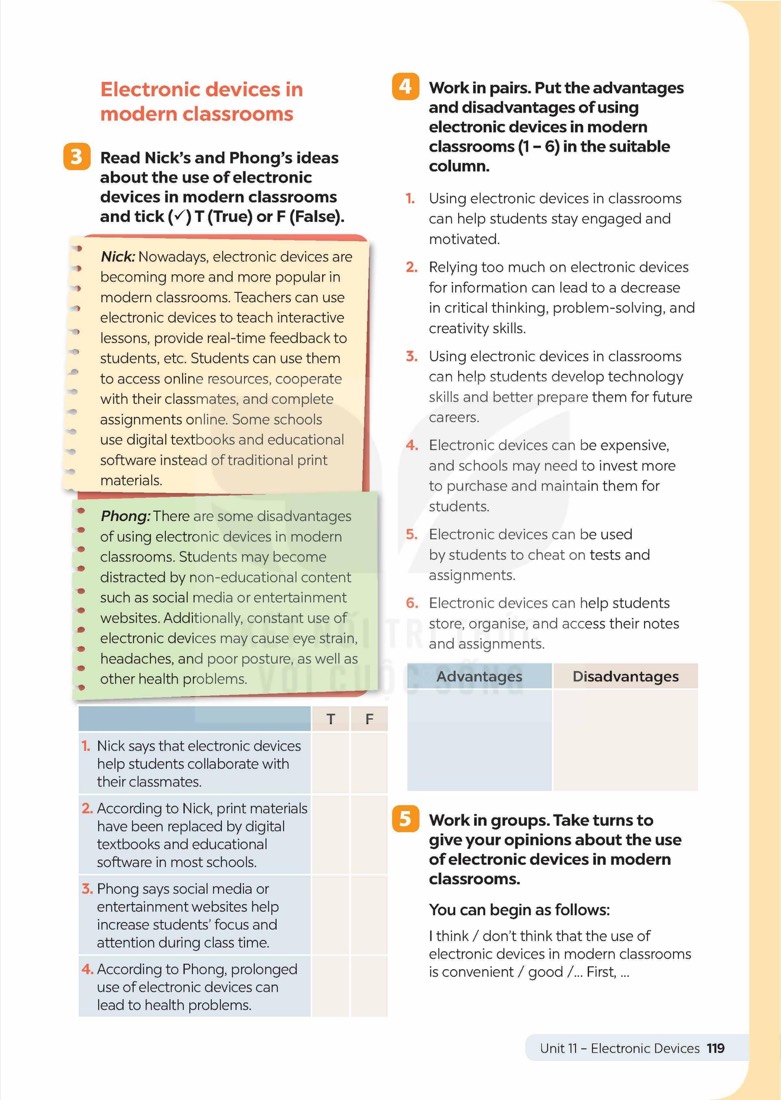
3. Bài đọc: Thiết bị điện tử trong lớp học hiện đại (Electronic devices in modern classrooms)
Phần đọc cung cấp hai góc nhìn trái chiều của Nick và Phong về việc ứng dụng công nghệ trong nhà trường hiện đại:
| Nguyên văn Tiếng Anh | Bản dịch Tiếng Việt |
|---|---|
| Nick: Nowadays, electronic devices are becoming more and more popular in modern classrooms. Teachers can use electronic devices to teach interactive lessons, provide real-time feedback to students, etc. Students can use them to access online resources, cooperate with their classmates, and complete assignments online. Some schools use digital textbooks and educational software instead of traditional print materials. | Nick: Ngày nay, các thiết bị điện tử đang ngày càng trở nên phổ biến trong các lớp học hiện đại. Giáo viên có thể sử dụng thiết bị điện tử để giảng dạy các bài học mang tính tương tác, đưa ra phản hồi theo thời gian thực cho học sinh, v.v. Học sinh có thể dùng chúng để tiếp cận các nguồn tài liệu trực tuyến, hợp tác với bạn cùng lớp và hoàn thành bài tập qua mạng. Một số trường học sử dụng sách giáo khoa kỹ thuật số và phần mềm giáo dục thay thế cho tài liệu in truyền thống. |
| Phong: There are some disadvantages of using electronic devices in modern classrooms. Students may become distracted by non-educational content such as social media or entertainment websites. Additionally, constant use of electronic devices may cause eye strain, headaches, and poor posture, as well as other health problems. | Phong: Có một số nhược điểm của việc sử dụng thiết bị điện tử trong lớp học hiện đại. Học sinh có thể bị xao nhãng bởi nội dung phi giáo dục như mạng xã hội hoặc các trang web giải trí. Ngoài ra, việc sử dụng thiết bị điện tử liên tục có thể gây mỏi mắt, đau đầu và tư thế ngồi xấu, cũng như các vấn đề sức khỏe khác. |
4. Bảng từ vựng trọng tâm của bài học
| Từ vựng / Cụm từ | Phiên âm IPA | Từ loại | Nghĩa tiếng Việt | Ví dụ trong bài |
|---|---|---|---|---|
| interactive | /ˌɪntərˈæktɪv/ | adj | tương tác | Teachers can use electronic devices to teach interactive lessons. |
| real-time feedback | /ˌrɪəl ˈtaɪm ˈfiːdbæk/ | n phr | phản hồi tức thì, phản hồi theo thời gian thực | ...provide real-time feedback to students. |
| cooperate | /kəʊˈɒpəreɪt/ | v | hợp tác, phối hợp | Students can use them to cooperate with their classmates. |
| collaborate | /kəˈlæbəreɪt/ | v | cộng tác, hợp tác | Nick says that electronic devices help students collaborate with their classmates. |
| distracted | /dɪˈstræktɪd/ | adj | bị phân tâm, bị xao nhãng | Students may become distracted by non-educational content. |
| eye strain | /ˈaɪ streɪn/ | n | mỏi mắt, căng thẳng mắt | ...constant use of electronic devices may cause eye strain... |
| posture | /ˈpɒstʃə(r)/ | n | tư thế (ngồi, đứng) | ...headaches, and poor posture, as well as other health problems. |
| engaged | /ɪnˈɡeɪdʒd/ | adj | tích cực tham gia, hào hứng | ...help students stay engaged and motivated. |
| critical thinking | /ˌkrɪtɪkl ˈθɪŋkɪŋ/ | n phr | tư duy phản biện | ...lead to a decrease in critical thinking, problem-solving, and creativity skills. |
| maintain | /meɪnˈteɪn/ | v | bảo trì, duy trì | ...schools may need to invest more to purchase and maintain them. |
5. Hướng dẫn làm bài tập SGK (Trang 118 – 119)
Activity 1: Listen and read the conversations. Pay attention to the highlighted sentences.
(Nghe và đọc các đoạn hội thoại. Chú ý các câu được làm nổi bật.)
- Cách làm: Đọc lại hai đoạn đối thoại ở mục 2, chú ý ngữ điệu lên giọng ở cuối câu hỏi kiểm tra: Got it?, Do you follow me? và ngữ điệu lịch sự khi yêu cầu nhắc lại: Could you say that again, please?.
Activity 2: Work in pairs. Make similar conversations for the following situations.
(Làm việc theo cặp. Tạo các đoạn hội thoại tương tự cho các tình huống sau.)
- Tình huống 1: Bạn của em nhờ em giải thích luật của một trò chơi. Em giải thích luật cho bạn và kiểm tra xem bạn có hiểu không. Bạn trả lời là bạn đã hiểu.
Gợi ý hội thoại:
A: Can you explain the rules of this game to me?
B: First, each player rolls the dice to move their piece. If you land on a bonus square, you get another turn. Got it?
A: OK, I got what you mean. Let's play! - Tình huống 2: Một người lạ hỏi em đường đến bệnh viện gần nhất. Em chỉ đường và kiểm tra xem họ có theo kịp không. Người đó trả lời rằng chưa theo kịp lắm và nhờ em nhắc lại.
Gợi ý hội thoại:
Stranger: Excuse me, could you tell me the way to the nearest hospital?
You: Go straight along this street, turn left at the traffic lights, and you will see the hospital on your right. Do you follow me?
Stranger: I'm sorry. I don't quite follow you. Could you say that again, please?
You: Sure. Go straight, turn left at the traffic lights, and it's on your right.
Activity 3: Read Nick’s and Phong’s ideas about the use of electronic devices in modern classrooms and tick (✓) T (True) or F (False).
(Đọc ý kiến của Nick và Phong về việc sử dụng thiết bị điện tử trong lớp học hiện đại và đánh dấu T hoặc F.)
| Câu nhận định | Đáp án | Dẫn chứng & Giải thích |
|---|---|---|
| 1. Nick says that electronic devices help students collaborate with their classmates. | T | Trong bài, Nick viết: "Students can use them to access online resources, cooperate with their classmates...". Từ cooperate đồng nghĩa với collaborate (hợp tác). |
| 2. According to Nick, print materials have been replaced by digital textbooks and educational software in most schools. | F | Nick chỉ nói: "Some schools use digital textbooks..." (Một số trường học), chứ không phải "in most schools" (ở hầu hết các trường). |
| 3. Phong says social media or entertainment websites help increase students’ focus and attention during class time. | F | Phong khẳng định: "Students may become distracted by non-educational content such as social media or entertainment websites." (Học sinh có thể bị xao nhãng, chứ không phải tăng độ tập trung). |
| 4. According to Phong, prolonged use of electronic devices can lead to health problems. | T | Phong nêu rõ: "Additionally, constant use of electronic devices may cause eye strain, headaches, and poor posture, as well as other health problems." (Việc sử dụng liên tục/kéo dài gây ra các vấn đề sức khỏe). |
Activity 4: Work in pairs. Put the advantages and disadvantages of using electronic devices in modern classrooms (1 – 6) in the suitable column.
(Làm việc theo cặp. Xếp các ưu điểm và nhược điểm của việc dùng thiết bị điện tử trong lớp học hiện đại vào cột thích hợp.)
| Advantages (Ưu điểm) | Disadvantages (Nhược điểm) |
|---|---|
| 1. Using electronic devices in classrooms can help students stay engaged and motivated. (Giúp học sinh hào hứng và có động lực học tập.) 3. Using electronic devices in classrooms can help students develop technology skills and better prepare them for future careers. (Giúp học sinh phát triển kỹ năng công nghệ và chuẩn bị tốt hơn cho nghề nghiệp tương lai.) 6. Electronic devices can help students store, organise, and access their notes and assignments. (Giúp học sinh lưu trữ, sắp xếp và truy cập ghi chú, bài tập thuận tiện.) | 2. Relying too much on electronic devices for information can lead to a decrease in critical thinking, problem-solving, and creativity skills. (Phụ thuộc quá nhiều vào thiết bị điện tử làm giảm tư duy phản biện, kỹ năng giải quyết vấn đề và sáng tạo.) 4. Electronic devices can be expensive, and schools may need to invest more to purchase and maintain them for students. (Chi phí tốn kém, nhà trường phải đầu tư nhiều để mua sắm và bảo trì.) 5. Electronic devices can be used by students to cheat on tests and assignments. (Có thể bị học sinh lợi dụng để gian lận trong kiểm tra và bài tập.) |
Activity 5: Work in groups. Take turns to give your opinions about the use of electronic devices in modern classrooms.
(Làm việc theo nhóm. Lần lượt nêu ý kiến của mình về việc sử dụng thiết bị điện tử trong lớp học hiện đại.)
Mẫu bắt đầu gợi ý trong SGK:
"I think / don't think that the use of electronic devices in modern classrooms is convenient / good /... First, ..."
Đoạn văn mẫu tham khảo:
- Quan điểm đồng tình (Advantage-oriented):
"I think that the use of electronic devices in modern classrooms is very good and useful. First, using these devices helps students stay engaged and motivated during the lessons. Second, it allows students to develop essential technology skills and better prepares them for their future careers. Finally, it helps us easily store, organise, and access our learning materials anytime." - Quan điểm e ngại nhược điểm (Disadvantage-oriented):
"I don't think that the use of electronic devices in modern classrooms is completely good. First, students can easily get distracted by social media and games instead of listening to teachers. Second, constant screen time causes serious health issues like eye strain and headaches. Moreover, relying too much on them may decrease students' critical thinking and problem-solving skills."
🌟 Em đã học (Ghi nhớ kiến thức trọng tâm)
- Nắm vững các mẫu câu kiểm tra mức độ hiểu (Checking understanding) và cách phản hồi (Responding) trong tiếng Anh giao tiếp.
- Khám phá các quan điểm về lợi ích và tác hại của việc sử dụng thiết bị điện tử trong trường học hiện đại qua ý kiến của Nick và Phong.
- Bổ sung vốn từ vựng học thuật và giao tiếp: interactive, cooperate, collaborate, distracted, eye strain, posture, critical thinking...
- Hướng dẫn giải chi tiết toàn bộ các bài tập từ Activity 1 đến Activity 5 trang 118 – 119 SGK Tiếng Anh 9.